Artificial intelligence covers many approaches, but one of the earliest and most practical is the expert system. These are programs built to mimic the reasoning of human specialists within a specific field. They may not attract the same attention as machine learning or robotics, yet their role is central in industries where structured reasoning matters more than raw data. Expert systems provide a way to apply expert-level decision-making consistently, giving support in areas like medicine, engineering, law, and business operations where accuracy and reliability shape outcomes.
Understanding Expert Systems
Expert systems work by representing human expertise in a very narrow area. Unlike machine learning, which looks for patterns in data, these systems operate on rules and facts that experts provide. The knowledge is encoded into a knowledge base, while an inference engine applies logical steps to arrive at conclusions. This is why they are often described as rule-based reasoning systems rather than adaptive learners.

Take healthcare as an example. When a physician enters patient symptoms, the expert system matches them against stored knowledge to suggest potential diagnoses. The value lies in reducing oversight and guiding less experienced practitioners. In manufacturing, an expert system can detect issues on an assembly line by following a structured process to isolate problems. These applications illustrate that while expert systems do not learn like humans, they replicate the structured thought processes experts use every day.
Components and How They Work?
Every expert system is built on three essential components: the knowledge base, the inference engine, and the user interface. The knowledge base is the repository of rules and domain-specific facts. This is the foundation that makes the system credible, since its quality reflects the depth of expert input. The inference engine is the reasoning mechanism. It can use forward chaining, where it processes from facts toward conclusions, or backward chaining, where it tests a conclusion and checks whether the available facts support it.
Imagine a financial advisory system. With forward chaining, it would begin with information such as a client’s income and expenses, then propose investment or budgeting suggestions. With backward chaining, it might start with the goal—say retirement savings—and work backward to verify whether the client’s financial data supports that outcome. The third element, the user interface, connects human users to the system, presenting complex reasoning in plain language. This interface is what allows doctors, engineers, or analysts to interact with the system without needing programming expertise.
One important strength is traceability. Since rules are explicit, users can follow the chain of reasoning. In medicine, a doctor can see why the system recommended a certain treatment. This quality distinguishes expert systems from more opaque AI models, making them dependable in professions where accountability is not optional.
Applications Across Fields
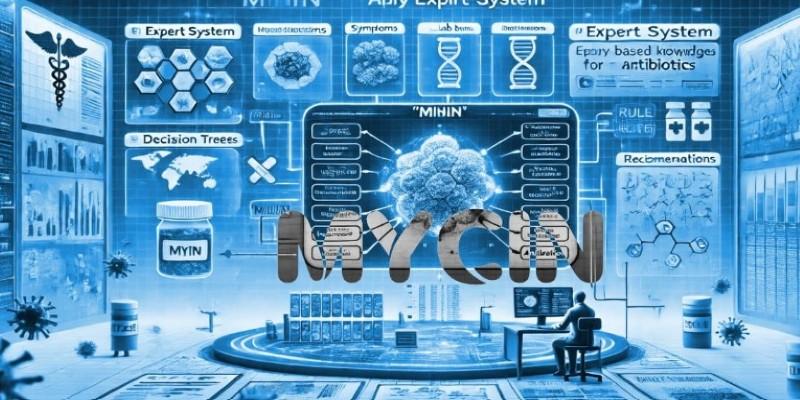
The influence of expert systems can be seen in many industries. Medicine produced one of the earliest examples: MYCIN, developed in the 1970s to assist doctors with bacterial infection treatments. Though MYCIN never became a clinical tool, it proved that structured reasoning could improve diagnostic support. Today, healthcare systems continue to use similar principles for prescribing medications or analyzing lab results.
In business, expert systems contribute to decision-making in areas such as credit scoring and investment analysis. Banks use them to evaluate loan applications, ensuring consistent application of policies. In agriculture, systems help farmers manage soil conditions, detect plant diseases early, and optimize irrigation schedules. By codifying agricultural expertise, even small farmers with limited resources gain access to advanced decision support.
Engineering is another field where expert systems thrive. They are used to maintain aircraft, troubleshoot electrical networks, and plan manufacturing schedules. For example, an airline maintenance system might guide engineers through diagnostic steps, reducing the risk of overlooking critical faults. Even in customer service, early help systems were built as expert systems, guiding users through troubleshooting by following logical rules.
These examples highlight that expert systems remain useful in contexts where structured knowledge, not raw data, provides the most reliable guidance.
Strengths and Limitations
Expert systems offer clear strengths. They preserve the knowledge of seasoned experts, making it available to others in the organization. This reduces reliance on individual specialists and ensures knowledge continuity when experts retire or move on. Their consistency is another advantage—they do not suffer from fatigue or bias in the way humans might. And their transparency builds trust, since users can trace how decisions were made.
Yet they also have weaknesses. Constructing a comprehensive knowledge base is time-consuming. Extracting expert knowledge is challenging, since much of it is tacit and experience-based. Once built, the systems require constant updates to stay relevant, especially in fast-moving fields like healthcare or finance. Their rigidity is another drawback. Unlike modern machine learning models that adapt as data grows, expert systems need manual adjustments when new scenarios emerge. This makes them less flexible in handling situations beyond their programmed scope.
Still, their advantages in accountability and explainability often outweigh these challenges, particularly in fields where errors carry heavy consequences. The rigidity of expert systems is sometimes a strength rather than a weakness, ensuring that decisions are made within known and carefully tested boundaries, offering reliability, consistency, and reassurance to users who depend on trustworthy outcomes.
Conclusion
Expert systems in artificial intelligence are a foundational approach that seeks to capture and apply human expertise in structured ways. With components like knowledge bases and inference engines, they provide reasoning that is both consistent and transparent. Their applications, from diagnosing illnesses to managing farms, highlight their real-world impact. Though limited in adaptability, their ability to preserve expertise and explain reasoning makes them valuable. As AI evolves, the lessons from expert systems—clarity, accountability, and structured reasoning—remain central, ensuring these systems continue to shape the direction of intelligent technologies.