Look at the evidence: a computational system can generate a photorealistic image based on a six-word description, compose music in the style of any historical master, or write a poem that feels genuinely moving. To an unbiased observer, the output is novel, surprising, and often beautiful. This success forces us to ask a profound question: Is this genuine creativity, or just highly advanced mimicry?
The answer hinges entirely on how we define "creative". If creativity is solely measured by the product, then yes, these programs are incredibly creative. If, however, creativity requires intent, emotion, and conscious originality, then the answer is almost certainly no. The field of computational creativity breaks down this debate by examining three types of novelty that machines can achieve.
Combinational Creativity (The Easy Win)
The simplest form of creativity, and the one computational systems master instantly, is Combinational Creativity. This involves producing unfamiliar mixtures of familiar ideas.
The Mechanism of Hybridization
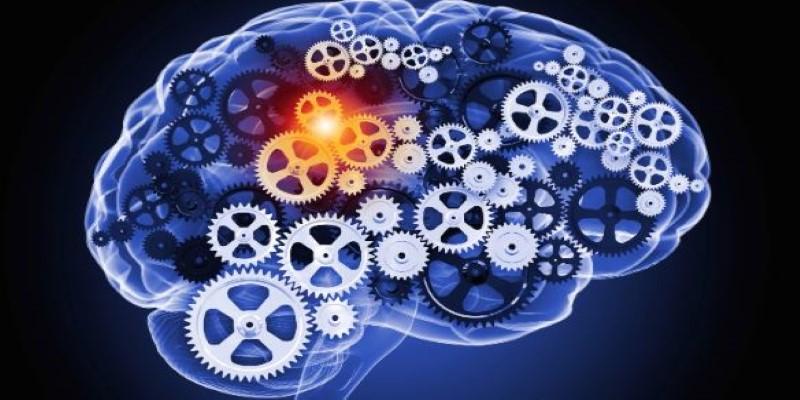
Modern generative systems are trained on vast datasets—trillions of words, images, or musical scores. They learn the statistical rules that govern human creation: how certain colors go together, how a sentence structure usually flows, or how musical notes relate in a specific key.
Image Blending: A user asks for "A watercolor painting of a steampunk rhino wearing a spacesuit." No such image exists in the training data, but the system understands the style of "watercolor," the structure of a "rhino," the aesthetic rules of "steampunk," and the components of a "spacesuit". It then mathematically blends these concepts into a surprising, novel image.
Style Transfer in Music: Systems can analyze a piece of music by one composer and instantly recompose it in the style of another (e.g., Bach's fugues played with the orchestration of Debussy). The machine is combining known elements in a new way, which is a key trait of human creative discovery.
The Role of the Human Editor
In combinational work, the creativity often resides primarily with the human user. The system is merely an incredibly fast tool, like a digital paintbrush.
The Prompt as the Concept: The human provides the original conceptual leap ("steampunk rhino in a spacesuit"). The machine executes the rendering. The human artist then selects the best output from a hundred generated options and refines the prompt, maintaining creative control from conception to selection.
Exploratory Creativity (The System Limits)
Exploratory Creativity involves searching within a well-defined conceptual space to find solutions that were previously unknown. This is where the machine demonstrates impressive, though bounded, novelty.
Navigating the Conceptual Space
Computational systems can explore possibilities faster and more systematically than any human.
Constraint Optimization: A system tasked with architectural design is given a thousand constraints (budget, size, energy efficiency, local zoning codes). It then searches the vast space of possible designs to find a solution that maximizes aesthetic value while minimizing cost, often finding novel structural solutions that a human designer, limited by learned biases, might miss.
Game Design: In video games, systems can generate millions of unique playable levels, puzzles, or new enemy behaviors by systematically exploring the rules of the game engine. The novel outcome is a direct result of computational persistence and complex rule-following.
The Limitation of Boundaries
The system is fundamentally limited by the boundaries of the conceptual space it was taught. It can only explore the territory it already knows.
No Self-Modification: The system cannot, on its own, suddenly decide to ignore the rules of watercolor or music theory and invent a new form of art. It has no motivation to break the conventions it was trained on because its entire function is based on predicting and generating patterns consistent with those conventions.
Transformational Creativity (The Human Barrier)
Transformational Creativity is the most profound kind, requiring the creator to fundamentally change or transcend the existing rules of a conceptual space. This includes inventing entirely new art forms, breaking established laws of composition, or creating new paradigms that redefine an entire field (e.g., the jump from classical to abstract art).
The Role of Consciousness and Intent
This level of creativity is universally considered to require conscious motivation, emotional depth, and intentional rejection of the established order.
Motivation and Emotion: Creativity, in the human sense, is often driven by struggle, persistent desire, social commentary, or the need for emotional expression. Computational systems lack life experience, struggle, or the ability to feel the need to express themselves. They are driven by mathematical goals (minimizing error, maximizing statistical probability), not by personal vision.
Authorship and Responsibility: If a computer program generates a shocking or profound image, the authorship belongs to the human who wrote the code, curated the data, and selected the final piece. A system cannot claim authorship because it lacks the consciousness necessary to assume ethical or artistic responsibility for its output.
The Future: Co-Creation
The most productive future involves recognizing the system as a collaborator, not a competitor.
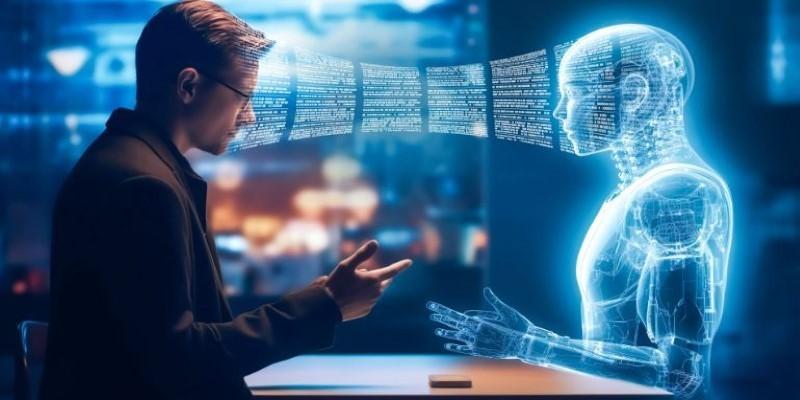
Augmenting Human Artists: The technology acts as a partner in a mixed-initiative creation process. The machine offers millions of suggestions (Combinational Creativity), and the human artist applies judgment, intent, and vision to select, guide, and modify the output. The human provides the transformational leap; the machine handles the rapid execution. This partnership allows human creativity to explore new frontiers faster than ever before.
Conclusion
Can a computational system create art? Absolutely. Can it write beautiful prose? Without a doubt. But the underlying mechanics show that this is achieved through incredibly powerful pattern recognition and statistical prediction, not conscious intent. The systems are masters of combinational and exploratory creativity, expertly blending known elements in surprising ways.
However, they cannot achieve transformational creativity because they lack the human conditions—consciousness, emotion, lived experience, and the motivation to intentionally break the rules. The machine is the most powerful tool for creative production ever invented, but the source of the truly original, world-changing idea—the spark of artistic vision—remains firmly and uniquely human.