In this contemporary, dynamic digital world, mobile applications are crucial in the manner in which businesses, individuals, and organizations interact and execute their operations. The attempt to utilize the potential of mobile apps is the kind of step a hopeful developer or an entrepreneur can take by opting for Python mobile app development as a flexible alternative. Python has been greatly embraced in developing mobile applications on the basis of simplicity and efficiency, which allows various versions of a mobile application to be serviced by diverse platforms.
Though Python was initially conceived as a backend language and data-processing language, it has diversified into the mobile side with the help of frameworks that have been developed. These SDKs will allow programmers to create strong, native, and cross-platform cellular applications without being obliged to discover languages specific to the platform (such as Java on the Android platform or Swift on iPhone).
Why Python to Develop a Mobile App?
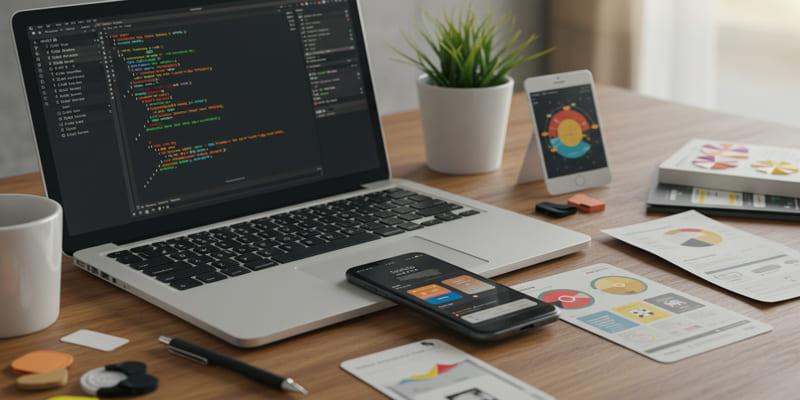
Selecting which programming language to use when developing a mobile app includes consideration of such factors as the difficulty of learning and mastering, the speed of development, code portability, and framework support. Python app development is going to work well for these requirements.
- Minimization of code: Python is a clean and minimalistic language, and, thus, writing and understanding the code takes little time.
- Fast Iteration Cycle: development is simple, and it leads to fast prototyping and a shorter time-to-market.
- Ecosystem: The framework libraries like Kivy and BeeWare can be used for cross-platform development of mobile applications.
- Large Libraries: The libraries in Python support working with databases, machine learning, graphics, and networking.
- Active Community: An active developer community will be unable to provide lots of resources and support.
Moreover, Python supports automation and backend programming, with which it is possible to make the maintenance and update of programs possible.
Important PyMobile frameworks of interest to developers
To have effective programming of a mobile application using Python, a framework is essential. These are some of the major Python mobile frameworks to note:
Flexible and Cross-Platform
Kivy is an open source Python framework that is used to make visually rich and touch-based applications more quickly. It is very handy with Android, iOS, Linux, Windows, and macOS, which is why it fits really well in cross-platform environments. Kivy will offer a custom UI toolkit, with the support of gestures, multi-touch, and hardware, as well as acceleration.
BeeWare: Native UIs
BeeWare enables programmers to develop software in Python. It is composed of a set of tools, such as Toga, which is a native UI toolkit that supports the development of applications that look and perform like native applications. BeeWare supports Android, iOS, Windows, Mac, Linux, and web platforms.
PyQt and PySide: The Best GUI
Whereas historically, PyQt and PySide were used in developing desktop applications, they can be modified to be used in developing mobile applications. These packages offer more sophisticated technologies to develop the GUIs of the present.
The frameworks reduce the entry requirements to mobile application development, so Python developers can create mobile apps without having to learn a new language.
How to Start Mobile App Development with Python
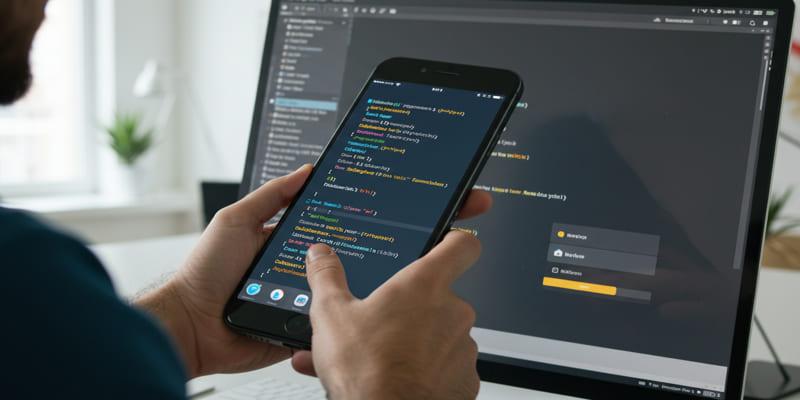
Learning Python and mobile app development may be overwhelming at first, but with a methodical guide, it becomes simple:
Step 1: Clarify what you want your mobile application to be
Start with a clear definition of what your app will accomplish, who it will serve, and what device platforms you will target; Android, iOS, or both. User login, data storage, push notifications, and third-party integrations are some of the features to consider.
Step 2: Development of Development Environment
Install Python and an IDE such as Visual Studio Code or PyCharm. Select a mobile platform (Kivy or BeeWare are casual-user-friendly). Preparing an emulator or real device test environment will support you in testing your application in the process.
Step 3: User Interface design
Use the framework's UI elements and style language to develop an easily manageable interface. The syntax used by Python is easy to understand; thus, the programmer can relate UI elements to the backend programs easily.
Step 4: Drive Backend Logics and Features
Personalize thecéCles increasing functionalities. Process to handle user input, store, and communicate with external APIs or databases.
Step 5: Ensure App Testing is Done Comprehensively
It is essential to test. Test with emulators and actual hardware to ensure performance, responsiveness, and usability. The debugging tools of Python make debugging easy.
Step 6: Distribute
The majority of frameworks provide application packaging to be able to deploy the apps on App Stores such as the Google Play Store and App Store. Learn how to submit to them, update them on information, and manage their user feedback.
Python Best Practices in Creating Mobile Apps
The following are the important practices in order to make your Python mobile application reach its full potential:
- Minimize Script Usage: Streamline codes and make them modular to make loading faster and spark fewer crashes.
- Use the power of the device: Leverage phone functions like GPS, camera, phone, and sensors to provide a great user experience.
- Include Popular Python Libraries: Use a data analytics, image processing, or machine learning library to gain access to powerful functionality.
- Analytics: Analyze your users and applications to make subsequent changes.
- Properly update: Keep in line with the updates to the operating system and close security holes.
All these strategies can assist in the sponsored creation of an excellent, competitive mobile application created with Python.
Challenges and Considerations
Python in mobile app creation is not limited to benefits only because there are notable restrictions to be considered by developers:
- Performance: Python is not considered to perform as fast as native languages, e.g., Java or Swift, in intensive applications.
- Mobile Restrictions: Native development has better support for certain specialized mobile aspects or integrations.
- Large App: The Python-based frameworks produce larger apps with additional runtime libraries.
Nevertheless, the trade-offs can be worth it because of the speed of development and simplicity that Python can bring to startups and prototyping.
Conclusion
The mobile app development landscape using Python is improving in a positive way. Python gets easier to build mobile applications with as improvements continue to occur on its frameworks, integration, and a greater community support.
Python data science and machine learning, as well as automation, will be compatible with mobile applications functionality, thereby allowing developers to create unique apps with intelligent capabilities and automation.
Whether you are an entrepreneur, a hobbyist, or a professional developer, getting into the idea of doing mobile apps with Python will open your horizons to turning off your brain by letting it be creative in a much easier way.