OpenAI has released a small but meaningful change in how people can shape their ChatGPT experience. The previously Plus-only “Custom Instructions” feature is now available to everyone, at no cost. This gives all users the ability to customize how ChatGPT interacts with them—something that previously required a subscription.
By letting people share their preferences, goals, or communication style, ChatGPT becomes more responsive to individual needs. This update adds flexibility and ease to everyday use, making it less generic and more useful across different types of tasks, from learning and writing to coding or casual conversation.
What Are Custom Instructions?
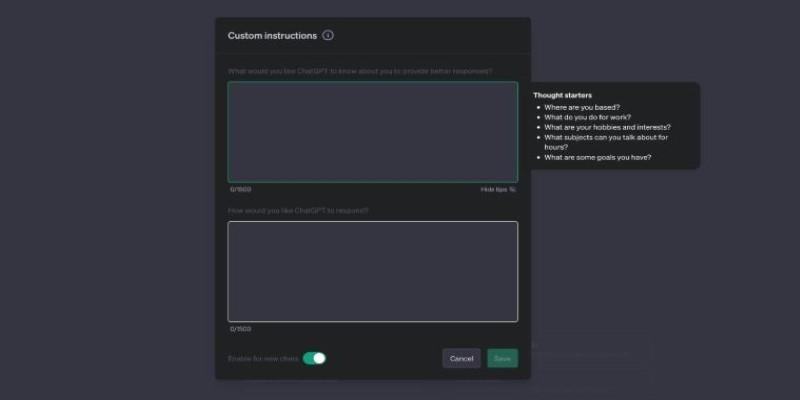
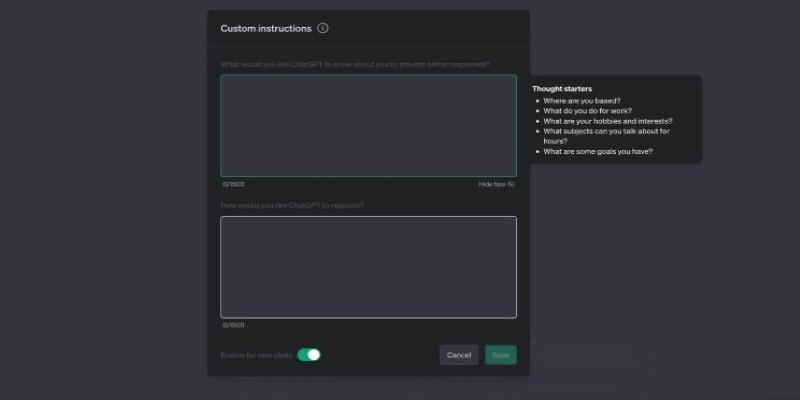
Custom Instructions are two simple fields that let you personalize how ChatGPT responds to you. The first asks what ChatGPT should know about you. The second asks how you’d like it to respond. These entries shape tone, structure, content depth, and more.

A teacher might ask for examples in lesson format, while a developer could prefer code-only replies. A small business owner might request short, bullet-style summaries. These instructions are not permanent personality changes—they’re guideposts that influence responses based on your stated preferences.
Before this update, these features were limited to ChatGPT Plus subscribers. Free users had to start from scratch in every session, reminding ChatGPT of their needs or retyping requests to adjust tone. Now that Custom Instructions are unlocked for everyone, it’s easier to maintain consistency and reduce repetition.
This makes ChatGPT more than just a reactive tool. It can now reflect your context and adjust itself automatically, without needing repeated direction. It helps shorten the gap between what you expect and what ChatGPT delivers.
Why This Matters for Everyday Use?
The ability to personalize ChatGPT helps make AI feel more natural, especially when used regularly. Not everyone speaks or thinks in the same way, so a default tone and structure may not fit every situation. Custom Instructions allow people to shape responses to match how they process information or communicate.
For example, some users prefer a casual tone, while others may need professional or academic formatting. Someone using ChatGPT to learn a new subject can ask for beginner-friendly terms. A person using it to practice a foreign language can request grammar tips or slower explanations.
It also improves workflow. If you request content in markdown, code with comments, or prefer answers that start with definitions, you can write it once and let ChatGPT follow that guidance across conversations. No more repeating the same framing every time you open a new chat.
There’s also a benefit for accessibility. For people who are neurodivergent or have specific communication needs, this feature allows more control over the way information is delivered. It reduces cognitive load by removing uncertainty in how responses will appear.
This kind of personalization is lightweight and easy to use. It doesn’t store information across sessions unless you use the separate memory feature, so it’s a more privacy-friendly way to guide ChatGPT without long-term tracking. It's a balance between customization and simplicity.
How This Affects the Future of AI Interaction?
The shift toward giving users control over how AI behaves reflects a broader trend in AI design. Instead of assuming a universal format or tone, tools like ChatGPT are becoming more adaptable. Rather than building rigid templates, developers are giving people a say in how AI sounds and thinks.
This isn’t just about convenience—it’s about making AI more useful. A model that adapts to the user’s language style, goals, or work habits becomes something more than a chatbot. It acts like a flexible assistant that can shape itself to different situations.
OpenAI has been exploring other personalization tools, including memory, which remembers facts across chats. But memory is more complex and raises questions about data storage. Custom Instructions are simpler: they let users set a tone or focus that applies within sessions, without longer-term data retention.
This change also improves performance. If the assistant understands what you care about—whether it's clarity, brevity, creativity, or technical accuracy—it can automatically prioritize those things. That means better responses, fewer corrections, and more productive use of time.
Opening this feature to free users shows confidence in how it works and its safety systems. It’s designed to guide output without creating inconsistency or risk, and it scales well since it doesn’t use much processing power. That makes it a smart move from both a user experience and technical standpoint.
From a wider perspective, it’s a step toward more meaningful human-AI interaction. It shows how people can shape their tools instead of just adapting to them.
Getting Started with Custom Instructions
If you want to try it, the setup is simple. In ChatGPT, click on your name or the settings menu and select "Custom Instructions." You'll see two boxes where you can write anything you like. You can describe your background, your goals, or your preferred communication style.
Some people use it to request summaries or visual formatting. Others set professional expectations, such as "Please reply as if writing for a legal audience" or “Use plain language suitable for age 10.” You can keep it casual too—“Be friendly and avoid technical terms unless I ask.”
The beauty of this feature is that it's flexible. You can edit it at any time, turn it off, or erase everything. It doesn't require you to learn complex rules or code, and you see the effect immediately in your next reply.
It’s also non-intrusive. ChatGPT won’t bring up your instructions unless they’re relevant. And since the instructions don’t persist across sessions unless memory is turned on, you stay in full control of what’s shared.
For many people, this feature is a perfect middle ground between standard AI responses and full long-term personalization. It makes everyday use easier, more comfortable, and better aligned with your habits.
Conclusion
ChatGPT making Custom Instructions free changes how users interact with AI. Now, anyone can personalize their experience without a subscription, making responses more relevant, clear, and consistent. This update helps users set tone and focus upfront, saving time and reducing repetition. It turns ChatGPT from a one-size-fits-all tool into something more adaptable for daily tasks. That shift in control and ease of use makes the feature genuinely useful for everyone.