Software engineers don’t adopt AI because it’s trendy. They bring it in when it fits into a process that already works but can be made faster, cheaper, or easier to scale. Most tools don’t get a second look unless they reduce friction without introducing new risk. Engineers don’t ask whether an AI tool is impressive.
They ask whether it handles edge cases, respects existing constraints, and works inside the systems they’ve already built. That’s the reality AI tools face in engineering environments. The ones that succeed are quiet, predictable, and easy to override. Everything else gets tested once and forgotten.
AI as an Assistant, Not a Co-Author
Most engineering teams treat AI as a utility, something closer to autocomplete than a thinking partner. Tools like GitHub Copilot save time on function stubs, repetitive test scaffolding, or routine syntax, but they’re not given control over architecture. That’s not about trust, it’s about flow. Engineers move quickly and make many small, local decisions. A tool that helps them type faster is useful. One that suggests structural changes or rewrites without context usually gets ignored.

These tools are valuable precisely because they’re low-risk. The model’s output can be accepted or rejected instantly. Developers rarely rely on its judgment. They treat it like a helper that might shave off a few minutes here and there, not a source of truth.
This also applies outside of code. Engineers use language models to convert curl commands to Python, explain obscure error messages, or generate simple SQL queries. But they always verify the output. The trust boundary is narrow. If something looks even slightly off, it gets rewritten. AI doesn't own the final step. It fills in the blank space and helps with acceleration, not direction.
Prototyping With Models Before Building Real Systems
AI becomes more than a convenience when it helps clarify ambiguity. Engineers often work on systems where inputs are fuzzy—user-written queries, freeform data entries, inconsistent spreadsheet formats. Instead of writing brittle regular expressions or case-by-case handlers from day one, they’ll use a language model to quickly see what’s possible.
For internal tooling, this kind of fast iteration matters. A small team might use a hosted model to simulate how a user support bot would respond to tickets, or test whether a classification system can catch certain invoice types. In these cases, the model is a stand-in for logic that will later be made explicit.
However, the jump from prototype to production usually requires removing the model or replacing it with something more controllable. Latency matters. Cost matters. Developers don’t want to rely on a service where each call adds half a second of wait time or costs half a cent per interaction.
Scaling breaks a lot of these setups. What works for five users doesn’t hold at 5,000. A prompt that behaves one way today might behave differently next week. Unless the model is tightly constrained, it introduces noise. When prototypes go live, the model is either locked down or replaced altogether.
Fine-Tuning Happens Less Than People Think
Although fine-tuning gets a lot of attention, it's not a common part of most software engineers' workflows. The reason is simple: it’s expensive, brittle, and not always more effective than well-designed prompt engineering combined with retrieval. Fine-tuning requires labeled data, experimentation infrastructure, and constant monitoring for regressions. Most teams don’t have that in place.
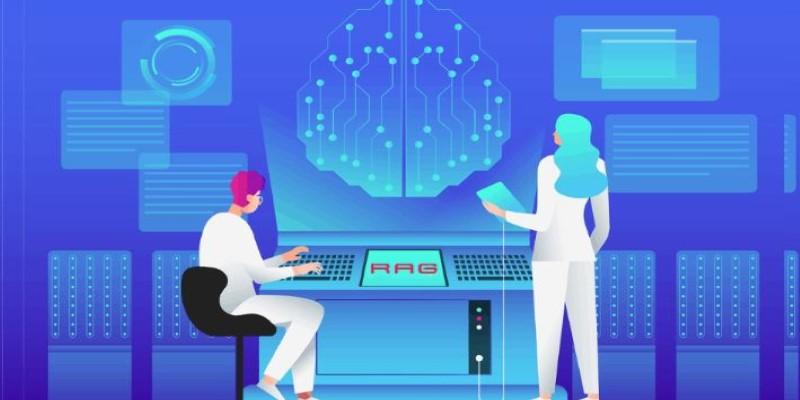
Instead, they build retrieval-augmented generation (RAG) pipelines. They embed structured content, index it with a vector database, and use similarity search to feed relevant context into prompts. This method is more maintainable and doesn’t require retraining the model if the knowledge base changes.
When fine-tuning is used, it’s usually narrow. Teams may fine-tune a small model to handle specific terminology in law, finance, or healthcare, where hallucinations aren’t acceptable. Even then, evaluation is difficult. You can’t just look at BLEU scores or accuracy. You have to measure downstream business metrics or monitor for user confusion and rework.
Automated evaluation for generative tasks remains a gap. Engineers often rely on snapshots and regression tests, but those don't catch subtle shifts in tone or intent. Manual review is slow and inconsistent. As a result, many teams limit their use of models in critical workflows unless the outputs are constrained, templated, or checked downstream.
Integration and Reliability Win Over Raw Capability
The most successful AI tools are the ones that behave like APIs. Predictable input, predictable output, fast failure modes. If a model takes too long to respond or returns unpredictable structures, it becomes a liability. Engineers value stability over novelty.
Hosted APIs are the norm because they remove the overhead of managing models. Most teams aren’t optimizing inference speed on GPUs or tweaking quantization settings. They want to plug in a service, handle errors gracefully, and log usage. That’s why latency and rate limits are such dealbreakers. If a model gets throttled under load or returns inconsistent outputs, it adds more support burden than it saves.
Observability is another critical layer. AI-powered systems are harder to debug than traditional code paths. Engineers often build custom tooling just to inspect prompts, view response histories, and trace failures. If something goes wrong, they need to know whether it was the data, the prompt, the model, or the user input. Most general-purpose monitoring tools don’t cover this, so teams end up writing their own.
Error handling around AI calls is also more defensive. Engineers assume failure. They build fallbacks and retries. If a model generates an invalid response, the system needs to catch it before the user does. This is where many AI demos fall short—they work perfectly in a sandbox but break in unpredictable ways when integrated into live systems.
Conclusion
Software engineers don’t use AI to replace thinking. They use it to cut down on friction. When a tool fits into a process, reduces manual work, and doesn’t compromise reliability, it has a place. But the bar is high. Most engineers have limited patience for tools that require babysitting, introduce instability, or change behavior without warning. What succeeds isn’t the model with the most parameters—it’s the one that respects context, degrades gracefully, and behaves like a system component. In practice, AI becomes infrastructure, not inspiration. The best tools are the ones that work silently in the background and stay out of the way.