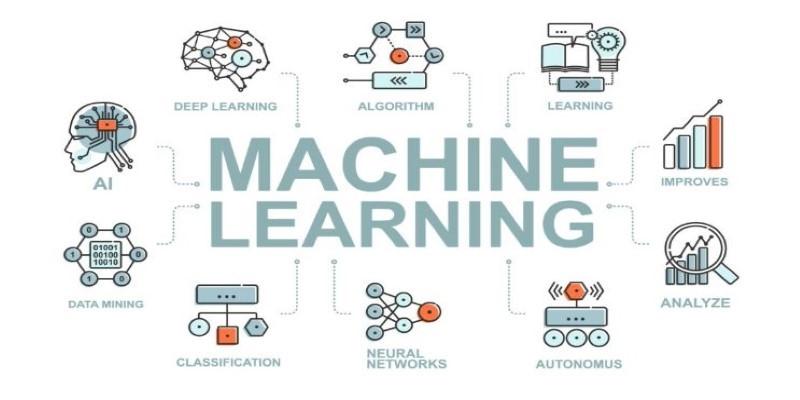
Machine learning powers many tools we use daily, from fraud detection to voice recognition, and at the center of this work are classification algorithms. These models are designed to learn patterns from labeled examples and then predict outcomes for new data. Whether it's sorting emails into spam or identifying diseases from scans, classification turns complex data into clear decisions. This process reflects how humans sort information, but at a greater speed and scale, making it one of the most practical methods in applied machine learning.
What Is a Classification Algorithm?
A classification algorithm is a supervised learning approach that assigns labels to input data. It’s the method behind deciding whether an image shows a cat or a dog, if a message is spam or safe, or if a transaction looks suspicious. The algorithm learns from training data that already includes the correct labels and then applies that knowledge to classify unseen inputs.
The idea of a decision boundary is central here. Think of it as a dividing line that separates classes based on features. Some models use simple boundaries, while others shape more flexible ones depending on the data’s complexity.
Classification can appear in three main forms. Binary classification handles two options, such as positive or negative. Multi-class classification covers more than two, like assigning images to categories such as cars, planes, or boats. Multi-label classification is different still, allowing a single item to carry multiple tags, such as labeling a movie review as both “romantic” and “comedy.”
Common Types of Classification Algorithms
There is no single best algorithm; instead, each has advantages suited to situations.
Logistic Regression
Logistic regression predicts probabilities by using a sigmoid function to map results between 0 and 1. It’s quick, easy to implement, and interpretable, which makes it a strong baseline. It works best when data has a linear relationship with the target outcome.
Decision Trees

Decision trees classify data through a sequence of splits based on feature values. They create straightforward “if-then” rules, producing models that are simple to interpret. However, without limits, they can grow overly deep and start fitting noise in the dataset.
Random Forest
A random forest reduces the overfitting problem by combining multiple decision trees, each trained on random subsets of data and features. The ensemble votes on the output, providing stronger results. Though powerful, it requires more resources and is less interpretable than a single tree.
Support Vector Machines (SVM)
SVMs look for the best separating line—or hyperplane—between classes. They work well for smaller, cleaner datasets and can use kernel functions to handle more complex, non-linear separations. While accurate, they can be slow on very large datasets.
K-Nearest Neighbors (KNN)
KNN classifies based on similarity, looking at the "k" closest neighbors to a new point and assigning the majority class. It's simple to understand, but computationally expensive with large datasets, as it requires storing and searching through the entire dataset.
Naive Bayes
Based on Bayes’ theorem, this algorithm assumes features act independently, which isn’t always realistic. Yet it remains highly effective, especially in text classification and spam detection, thanks to its speed and ability to handle high-dimensional data.
Neural Networks

Neural networks simulate layers of neurons to learn complex relationships. They can solve problems that traditional algorithms struggle with, such as image or speech recognition. Deep learning, which involves many layers, delivers high performance but demands extensive data and computing power.
Training, Testing, and Evaluating a Classification Model
Training a classification model begins with splitting data into training and testing sets. The training data allows the algorithm to learn, while the test data provides a fair measure of how well it generalizes to unseen examples.
Performance is usually measured with metrics. Accuracy is common but can mislead when classes are unbalanced. Precision reveals how often predicted positives are correct. Recall highlights how many actual positives were detected. The F1 score balances the two, while a confusion matrix shows the full picture with counts of true and false positives and negatives.
Which metric matters most depends on the goal. In finance, minimizing false positives may reduce wasted investigations. In healthcare, false negatives can be dangerous, so higher recall is often prioritized. Choosing carefully ensures the model’s value aligns with real-world needs.
Applications and Challenges of Classification Algorithms
Classification algorithms shape how industries work today. Financial institutions rely on them to flag potentially fraudulent transactions. Healthcare providers use them to detect diseases from scans or patient histories. Marketing teams apply them to predict which customers may leave or which offers are most effective. Even social media relies on classification for recommendations and filtering harmful content.
However, the challenges remain significant. Imbalanced datasets can bias a model toward majority classes. For example, in medical tests, if healthy cases vastly outnumber sick ones, the model may predict “healthy” too often. Solutions include resampling techniques or using algorithms designed for imbalance.
Feature selection is another hurdle. Too many irrelevant inputs may overwhelm the model, while too few can weaken predictions. Methods such as feature importance rankings help identify what truly matters.
Overfitting is an ongoing risk, especially with flexible models like neural networks. It makes the algorithm perform well in training but poorly on new data. Regularization, pruning, or cross-validation can help keep models balanced.
Interpretability is also a growing concern. Some models, such as decision trees, enable humans to see the reasoning behind predictions. Others, such as deep networks, function like black boxes. In sensitive areas like medicine or law, understanding decisions is as important as making accurate ones.
Conclusion
Classification algorithms are central to machine learning, shaping decisions across industries from finance to healthcare. They work by recognizing patterns in labeled data and predicting new outcomes, turning raw information into actionable insights. Each algorithm—from logistic regression to neural networks—offers unique strengths, and the right choice depends on the type of data, the problem at hand, and the cost of errors. While challenges like overfitting and interpretability remain, these models continue to refine how we process and act on data. By structuring information clearly, classification keeps machine learning both practical and indispensable.